“Go back! Go back! Do your duty as I’ve done mine. I’d rather die than be whipped!”

J.E.B. Stuart
(Photo Credit: Library of Congress)

Order Your Copy Today
“Go back! Go back! Do your duty as I’ve done mine. I’d rather die than be whipped!”
J.E.B. Stuart
(Photo Credit: Library of Congress)
“Don’t flinch boys! They’re shooting at me, not at you!”

Philip Kearny
(Credit: Library of Congress)
“Better a generation should die on the battlefield, that their children may grow up in liberty and justice.” ~Harriet Beecher Stowe

Harriet Beecher Stowe
(Photo Credit: Library of Congress)
“I never see one of Jackson’s couriers approach without expecting an order to assault the North Pole.” Confederate General Richard Ewell
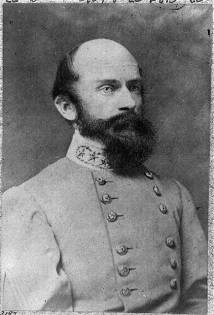
Confederate General Richard Ewell
(Photo Credit: Library of Congress)
With the massive number of casualties, Civil War medicine became a critical part of the entire conflict. At the start of the conflict, the United States Army medical staff consisted of only eighty-seven men. Northern officials decided to enlist the help of female nurses to serve the medical needs caused by the war.
By the end of the war, over eleven thousand doctors had served in the army. A vital component in the North to assist in caring for sick and wounded soldiers was the U.S. Sanitary Commission. This nonmilitary organization was formed in 1861 by civilians to assist the government’s efforts to care for the men. Over the course of the war, this organization raised more than $7 million and distributed more than $15 million worth of supplies.
The most famous nurse serving the Union Western army in association with the Sanitary Commission was a widow named Mary Ann Bickerdyke. The soldiers fondly referred to her as Mother Bickerdyke and she cared for the troops through nineteen battles.

Mary Ann Bickerdyke
(Photo Credit: Library of Congress)
Mary Bickerdyke gave the sick and wounded soldiers top priority and would not tolerate others failing to provide adequate care. On one occasion, a drunken assistant surgeon failed to care for the wounded men though it was his responsibility. Mother Bickerdyke responded to the surgeon, “Matter enough you miserable scoundrel! Here these men, any one of them is worth a thousand of you, are suffered to starve and die, because you want to be off upon a drunk! . . . you shall not stay in the army a week longer.” Within three days, the surgeon had been dismissed and he went to headquarters to ask for reinstatement. General Sherman listened to the man and asked who had caused the discharge; to which the surgeon said, “I suppose it was that woman, that Mrs. Bickerdyke.” General Sherman replied, “Oh, well, if it was her, I can do nothing for you. She [out]ranks me.”
 The Civil War Book