On this day in the Civil War, Confederate commissioners John Slidell and James Mason successfully get through the Union blockade at Charleston, South Carolina.

James Mason

John Slidell
(Photo Credit: Library of Congress)
Order Your Copy Today
On this day in the Civil War, Confederate commissioners John Slidell and James Mason successfully get through the Union blockade at Charleston, South Carolina.
(Photo Credit: Library of Congress)
On this day in the Civil War, the Confederate congress passes a bill amending the military draft law. The new regulations state that anyone owning 20 or more slaves is exempt from service in the Confederate army. Many Confederates said this situation was, “a rich man’s war and a poor man’s fight”.
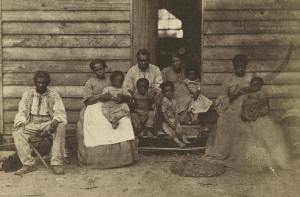
Slave Family
(Photo Credit: Library of Congress)
On this day in the Civil War, Confederate President Jefferson Davis sends a letter to General G.W. Smith, expressing his views on the use of blacks as laborers for the Confederate Army.
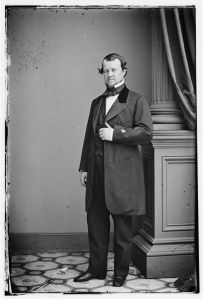
G.W. Smith
(Photo Credit: Library of Congress)
On this day in the Civil War, Confederate General J.E.B. Stuart and his cavalry begins several days of raiding in the north staring at Chambersburg, Pa.
Stuart and his 1,800 troopers circle around the entire army of Federal General George McClellan.

J.E.B. Stuart
(Photo Credit: Library of Congress)
On this day in the Civil War, the largest battle in Kentucky is fought at Perryville. President Lincoln recognized the strategic importance of Kentucky and stated, “I think to lose Kentucky is nearly the same as to lose the whole game.”
The Federals engaged in the battle were 20,000, compared to Confederate troops totaling 16,000. Total casualties numbered 7,600 or 21% of all the soldiers involved in the battle. The battle ended in a tactical draw; however, the Confederates retreated, leaving the field to the Federal army. From this point forward, the Federal army controlled Kentucky for the duration of the war.
Confederate Private Sam Watkins fought for the South in almost every major battle in the Western Theater. His view of the ferocity of the Battle of Perryville was reflected by saying, “I was in every battle, skirmish and march that was made by the First Tennessee Regiment during that war, and I do not remember of a harder contest and more evenly fought battle than that of Perryville.”


 The Civil War Book