On this day in the Civil War, Confederate General John Hunt Morgan and his raiders attack Union General William T. Sherman’s supply lines in Kentucky.

John Hunt Morgan
(Credit: Library of Congress)
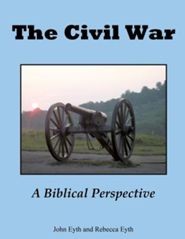
Order Your Copy Today
On this day in the Civil War, Confederate General John Hunt Morgan and his raiders attack Union General William T. Sherman’s supply lines in Kentucky.
John Hunt Morgan
(Credit: Library of Congress)
“Four score and seven years ago our fathers brought forth on this continent a new nation, conceived in liberty, and dedicated to the proposition that all men are created equal.Now we are engaged in a great civil war, testing whether that nation, or any nation so conceived and so dedicated, can long endure. We are met on a great battlefield of that war.

We have come to dedicate a portion of that field, as a final resting place for those who here gave their lives that that nation might live. It is altogether fitting and proper that we should do this.

But, in a larger sense, we can not dedicate, we can not consecrate, we can not hallow this ground. The brave men, living and dead, who struggled here, have consecrated it, far above our poor power to add or detract. The world will little note, nor long remember what we say here, but it can never forget what they did here.
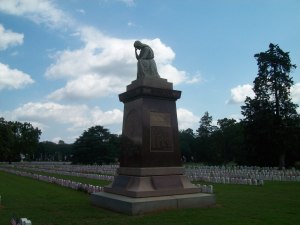
It is for us the living, rather, to be dedicated here to the unfinished work which they who fought here have thus far so nobly advanced. It is rather for us to be here dedicated to the great task remaining before us—that from these honored dead we take increased devotion to that cause for which they gave the last full measure of devotion—that we here highly resolve that these dead shall not have died in vain—that this nation, under God, shall have a new birth of freedom—and that government of the people, by the people, for the people, shall not perish from the earth.”
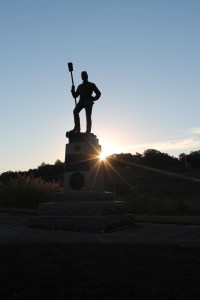
Gettysburg Address
President Abraham Lincoln
On this day in the Civil War, President Andrew Johnson gives general amnesty to those who participated in the Southern rebellion. Certain classes of Southerners were not eligible for this amnesty, these classes include those holding high rank in the Confederate military or government. Those Southerners must apply individually for pardon from the President of the United States.
 President Andrew Johnson
(Photo Credit: Library of Congress)
On this day in the Civil War, a regiment of black soldiers, the 54th Massachusetts, leaves Boston to train in South Carolina.
The regiment is led by Colonel Robert Gould Shaw, the son of a Boston abolitionist.

Colonel Robert Gould Shaw
(Photo Credit: Library of Congress)
On this day in the Civil War, Chief Justice Roger B. Taney rules that President Lincoln’s suspension of the writ of habeas corpus is illegal.
Taney was the supreme court chief justice during the Dred Scott decision in 1857, which led America closer to Civil War.

Chief Justice Roger B. Taney
(Photo Credit: Library of Congress)
 The Civil War Book